“The world will never lack wonders; what it lacks is wonder. We grow blind not because the light is dim, but we forget to look. The moment a man learns to marvel again, he steps back into the richness of reality.”
ARTIST’S BIO
JOHN WOODS
American Still Life Painter
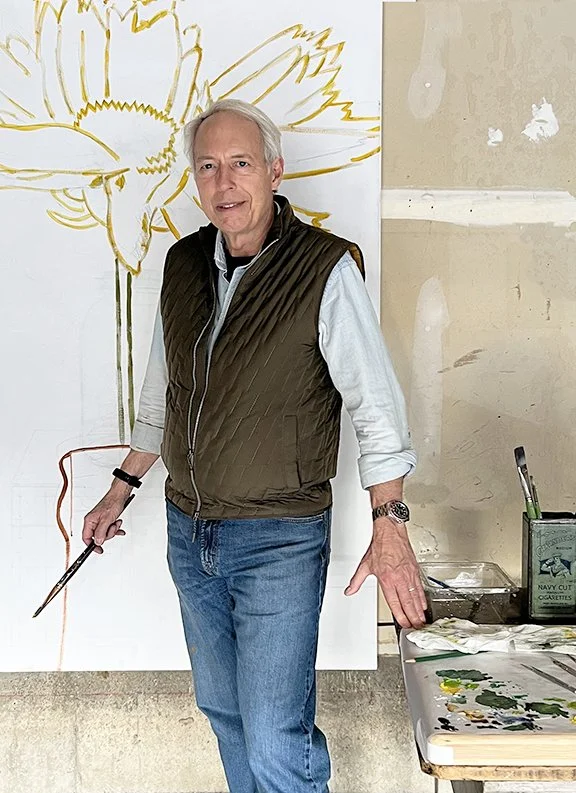
John Woods is a Denver-based American still life painter working in oil and acrylic at monumental scale. His large-scale works—reaching seven feet—stand in active conversation with the 250-year American still life tradition from Raphaelle Peale forward, carried into the present through contemporary painterly decisions of color, composition, and pictorial space.
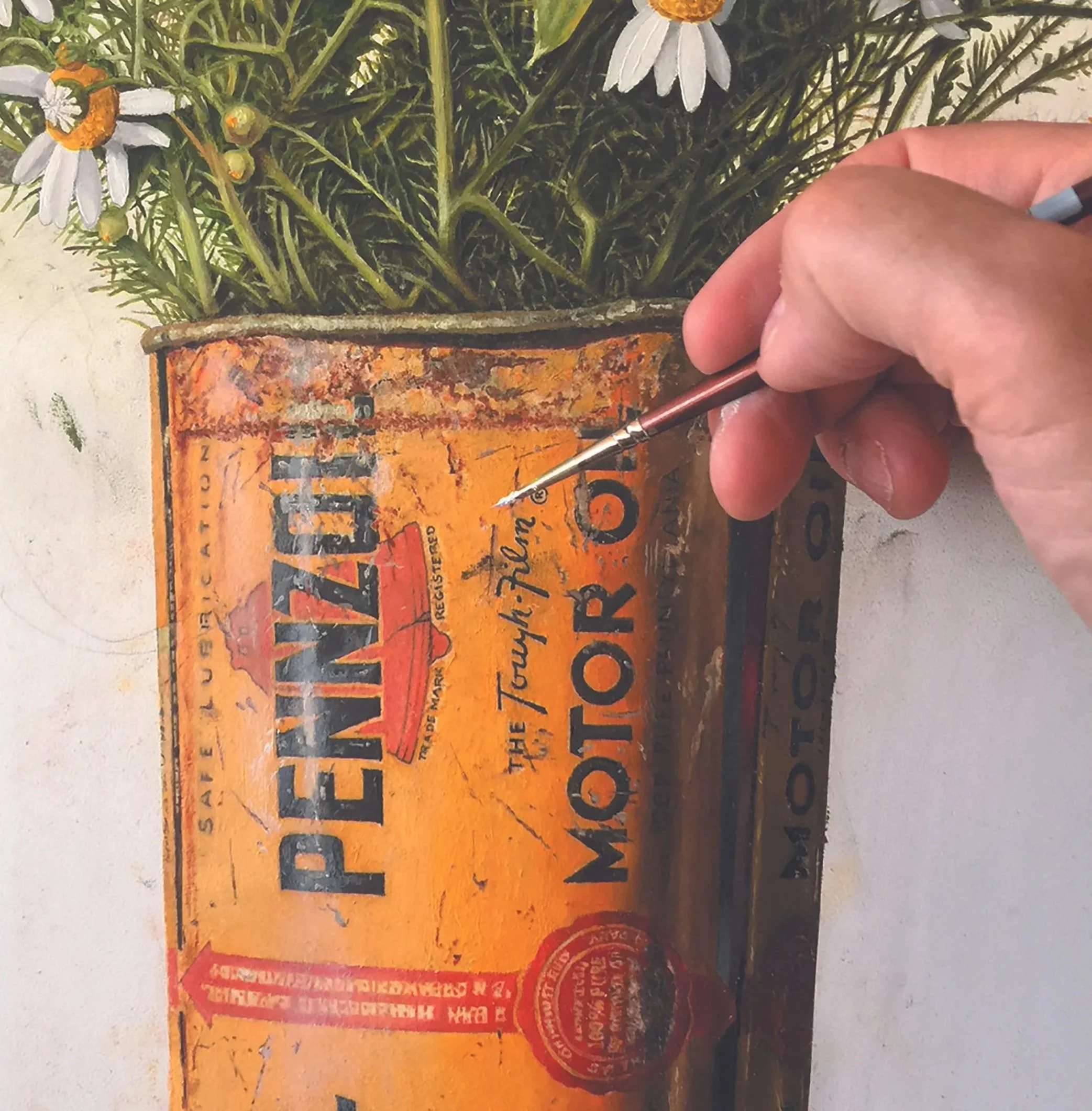
Woods paints flowers in vintage American containers—vintage tins, Ball jars, Coke bottles, and citrus crate labels—bringing optical discipline to vernacular subjects in the lineage of Peale and Peto, while making bold color decisions that nod toward David Hockney’s pictorial clarity and Wayne Thiebaud’s chromatic invention. His practice synthesizes American still life’s democratic subject matter with a contemporary approach to visual tension, scale, and invention.
His understanding of museum-quality work was shaped during formative years assisting with a significant private collection of postwar American and contemporary art—work that contributed to various museums including the Boston Museum of Fine Arts. Hands-on exposure to artists such as Calder, Cornell, de Kooning, Pollock, Johns, and Thiebaud established a lasting standard for craft, ambition, and institutional rigor.
Woods has maintained a dedicated painting practice for four decades. His work is held in private collections across the United States, including families associated with major museum institutions such as the Denver Art Museum, and includes work formerly in the collection of Ginny Williams, one of contemporary art’s most influential collectors and advocates. His paintings have generated competitive bidding at the Coors Western Art Show and have been featured in Southwest Art, Colorado Homes & Lifestyles, and Colorado Expression Magazine.
ARTIST’S STATEMENT
American Still Life: Conversation as Practice
I’m an American still life painter in active conversation with a 250-year tradition — from Raphaelle Peale forward. My work responds to that lineage through painterly decisions: color, composition, subject selection — honoring the tradition’s optical discipline while engaging the visual intelligence of contemporary American objects.
I paint flowers in Coke bottles, irises in mason jars, grocery store tulips with fruit crate labels — ordinary American objects that already contain sophisticated graphic DNA shaped by decades of commercial design. I honor their reality through precise rendering, then push the painting forward through bold color decisions and compositional tension.
Each oil painting is built over 11–13 weeks. The work is an argument — that reality rewards sustained attention, that beauty and craft still matter, and that the American still life tradition is not a closed chapter but a living practice.
That’s why this work matters now. A painting that demands sustained optical attention is resistance: to fragmentation, to the dismissal of craft, to the idea that reality requires theory to become meaningful.
That’s what I’m after: paintings for serious collectors who recognize the conversation and want to participate in it.
— John Woods
American Still Life Painter | Denver